

Network
Perrot: The Best Line-Up for High-Performance Sports Fields
Publishing date
Advert by IAKS member Perrot
Delivering and maintaining a high‑quality sports field is far more complex than simply keeping grass green. Whether in a professional stadium or a community sports complex, turf must perform consistently under pressure, support player safety, and remain resilient over time despite intensive use.
Irrigation is a critical part of this equation because the condition of the playing surface directly influences ball behaviour, athlete comfort, surface temperature, and ultimately the overall experience for both players and spectators.
With a heritage dating back to 1925, Perrot has developed irrigation systems specifically for the demands of sports surfaces, with solutions in venues across the world to support natural grass, synthetic turf, and hybrid installations in a wide variety of sports environments including football pitches, hockey fields, tennis courts, equestrian arenas, and multi‑purpose complexes.
One of the distinguishing aspects of Perrot’s offering lies in the diversity of sprinkler technologies available within its portfolio, enabling groundsmen and installers to embrace solutions that respond to the specific layout and functional demands of each individual sports surface.
What makes that approach particularly relevant today is the increasing pressure placed on sports facilities. Fields are expected to stay in play for longer periods, recover faster, and deliver consistent performance despite intensive use. At the same time, operators are under growing pressure to reduce water waste, modernize control systems, and justify investment through long-term durability.
Perrot’s portfolio is designed around exactly these needs.
© Puskas Ferenc
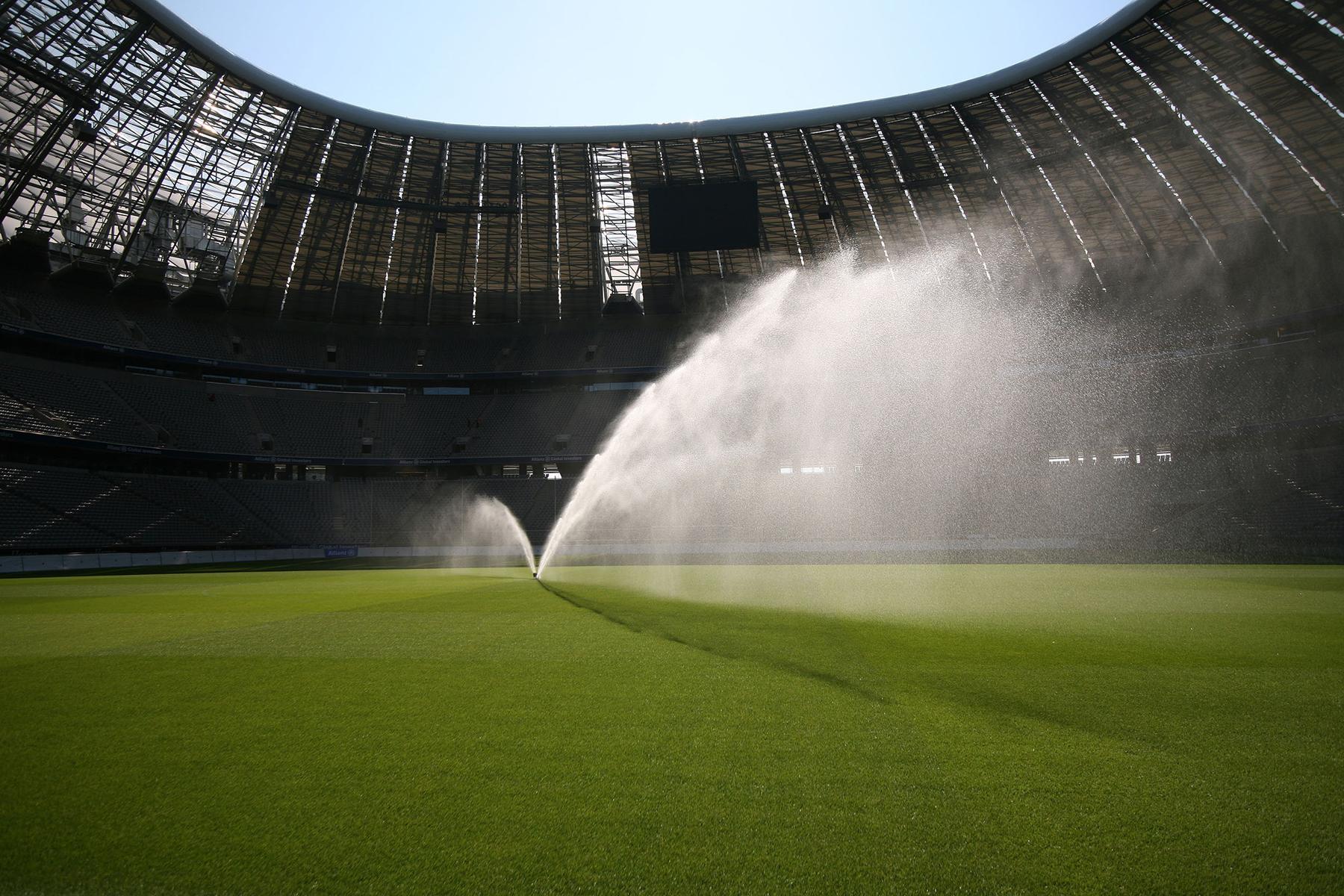
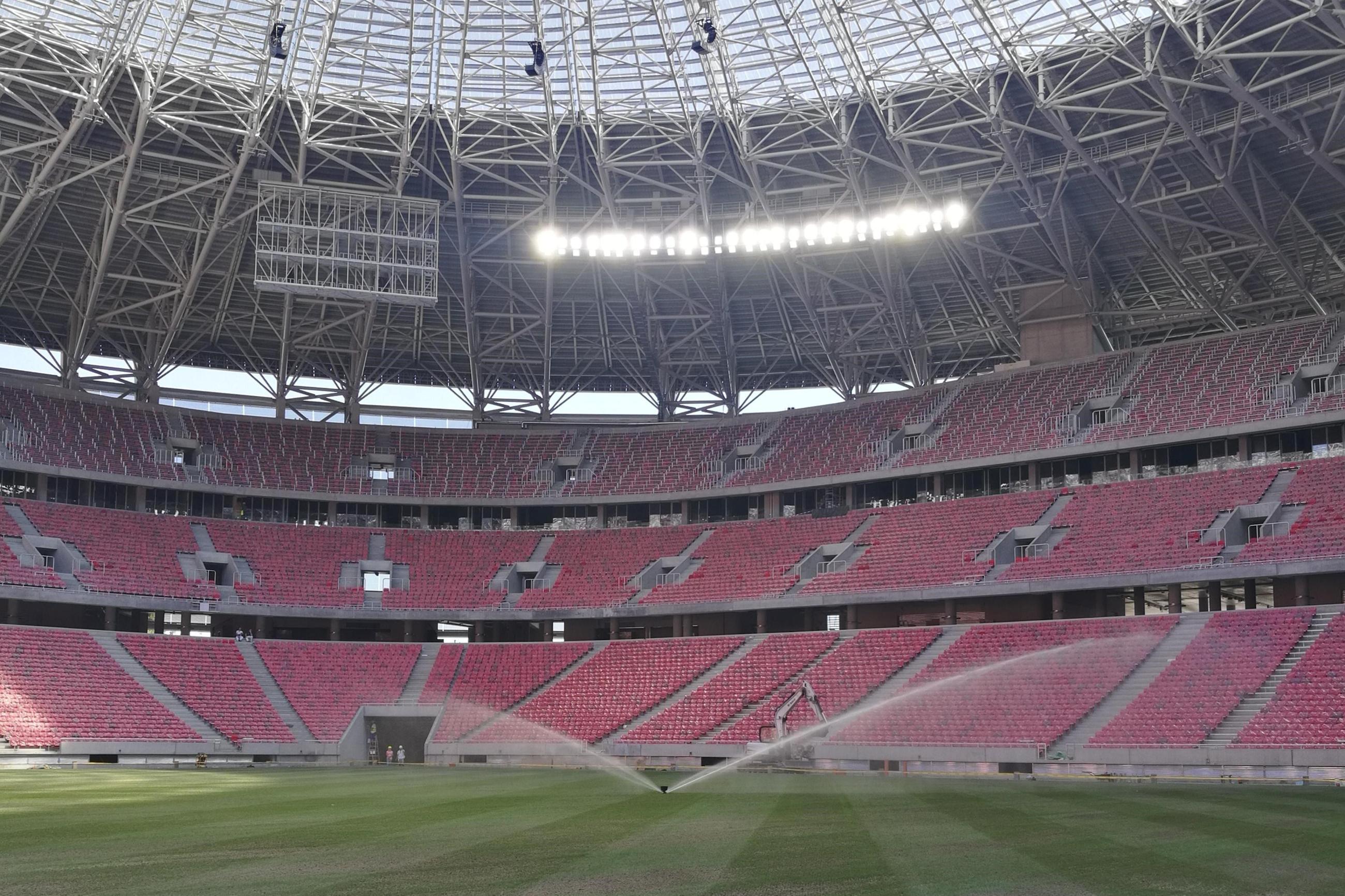
For natural turf applications, impact-driven pop-up sprinklers from the Triton range are a key part of the line-up. These sprinklers are valued for their long throw distances and, just as importantly, for their high rotation speed. Fast rotation allows irrigation to be completed in narrow maintenance windows—such as shortly before kickoff or even during halftime. Since the sprinklers retract below ground level when not in use, they also support a critical requirement in competitive sport: the playing area remains clear and safe.
Gear-driven sprinklers such as the Hydra series offer a different solution profile. These sprinklers are designed to provide stable performance across a broad pressure range and can be configured with different nozzles to suit varying field sizes and irrigation demands. That flexibility matters because no two sports facilities are exactly alike. Soil structure, field geometry, pressure conditions, and maintenance routines all influence how an irrigation system performs in practice.
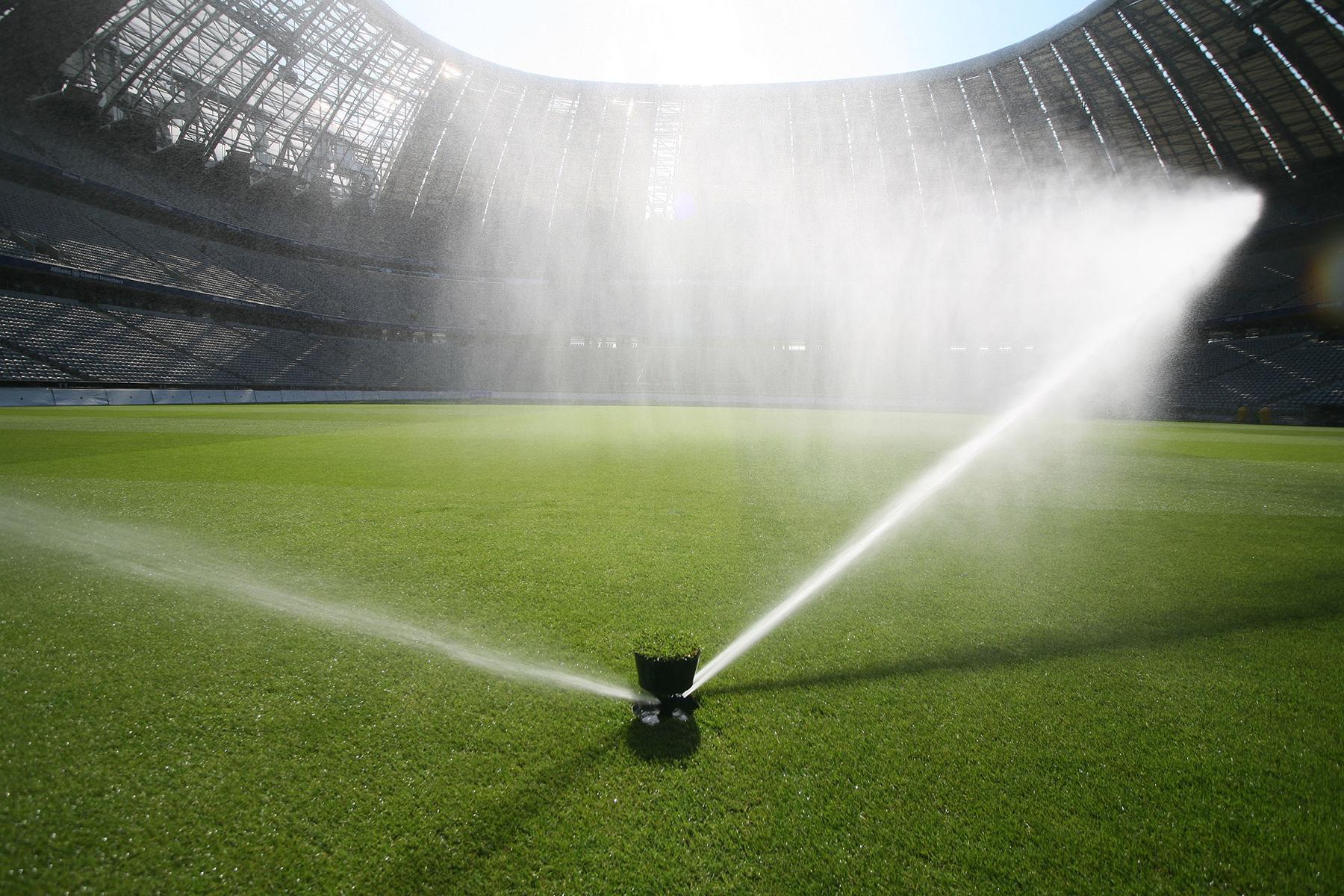
Where precision, range, and reliability are especially critical—particularly on artificial turf and hockey pitches—Perrot’s VP3 piston-driven sprinklers come into their own. Synthetic surfaces have very different irrigation objectives from natural grass. Water is not applied to support plant growth; it is used to cool the surface, reduce friction, improve playing characteristics, and help clean the field. Perrot’s artificial turf presentation also notes further functional benefits, including reduced skin burns and improved ball roll, while highlighting that the International Hockey Federation recommends sprinklers outside the hockey pitch, making long-range perimeter irrigation essential. In these scenarios, piston-driven technology enables effective watering without placing hardware inside the playing zone.
Taken together, these three technologies form more than a product range—they create a toolkit. Instead of forcing every sports facility into the same irrigation concept, Perrot gives designers the ability and flexibility to choose the most suitable technology for each application, or to combine systems where site conditions require it. That flexibility is one of the strongest arguments behind the brand’s position in the sports irrigation market.
The real challenge in sports irrigation is not simply getting water onto the field. It is getting the right amount of water, to the right place, at the right time, and doing so in a way that supports performance over the long term.
On natural turf, that means maintaining consistent soil moisture to support root development, turf recovery, and surface firmness. On heavily used pitches, inconsistent watering quickly translates into uneven growth and unpredictable playability. Perrot’s materials repeatedly emphasize distribution uniformity as a critical factor, and internal comparison tables show how system layout influences water efficiency and coverage quality. In other words, engineering matters: sprinkler spacing, nozzle selection, and pressure conditions all shape the final performance of the field.
That engineering mindset is particularly important in sports environments because turf quality is judged not only visually, but functionally. Grounds managers are not maintaining ornamental landscape; they are maintaining a surface that must recover between events, remain safe under pressure, and meet the expectations of athletes, coaches, and venue operators. The irrigation system therefore has to work as part of the field’s performance infrastructure. Perrot’s sports-focused design philosophy reflects this reality clearly.
Not every sports venue has the same infrastructure, timeline, or budget. While permanent underground systems are often the preferred solution for flagship pitches and high-use facilities, other sites require more flexible options. Secondary training grounds, temporary installations, or venues being developed in phases may not be ready for full fixed irrigation from day one.
Perrot addresses this with mobile irrigation solutions such as Rollcart. This product can cover large areas without a permanent underground network and can operate automatically along a defined path. That makes them particularly relevant for facilities that need effective irrigation with a lower initial infrastructure commitment, while still maintaining acceptable coverage across the playing surface. For many operators, that kind of flexibility can make the difference between postponing irrigation investment and implementing a workable solution immediately.
If sprinkler technology is one half of the modern irrigation equation, digital control is the other.
Perrot’s current positioning places increasing emphasis on intelligent control systems that allow operators to manage irrigation with far greater precision than fixed schedules alone can offer. The Regulus controller is designed to help minimise water consumption while maximizing turf health, supporting up to 16 stations. Irrigation becomes more targeted, more manageable, and more responsive to actual field needs.
For larger or more advanced installations, centralized systems such as Sirrah II extend this capability further. The web-based platform is able to support more complex installations, and integrate with sensors and existing infrastructure. This is increasingly important for facilities managing multiple surfaces or operating under tighter water-use scrutiny. Remote oversight, data-informed decision-making, and flexible station management make irrigation easier to align with weather conditions, match schedules, and real operational priorities rather than following a rigid watering routine.
This intelligent approach is not simply about convenience. Efficient irrigation is both environmentally conscious and cost-effective. For sports facilities facing rising costs and stronger environmental expectations, that combination is no longer optional. Efficient watering is becoming part of the broader definition of a well-managed venue.
Durability is another reason Perrot’s sports irrigation systems stand out. Sports facilities need infrastructure that can keep performing year after year, often under demanding conditions and with limited maintenance windows. Robust materials and long-term reliability can reduce maintenance requirements and lower total cost of ownership. That matters just as much for municipal authorities and community venues as it does for elite clubs: both need systems that justify investment over time, not just at installation.
In the end, the strongest case for Perrot is not any single sprinkler, controller, or configuration, but the strength and coherence of the overall system. By combining impact-driven, gear-driven, and piston-driven sprinkler technologies with mobile irrigation solutions and advanced digital control platforms, Perrot offers a portfolio built specifically for the real demands of sports surfaces. The result is not a generic irrigation approach adapted to sports, but a specialised solution designed to protect playability, support sustainability, and keep fields performing at the highest level, season after season.