

Bild
Network
From Olympic stage to community pool
Publishing date
Advert by IAKS member Myrtha Pools
When the crowds cheered their last roar at Paris La Défense Arena back in summer 2024, the story of two extraordinary Myrtha pools was far from being over. In fact, it was just beginning. Nearly two years from then, the legacy promise made before the first stroke was ever swum is materialising – pool by pool, community by community – across the greater Paris metropolitan area.
The plan was bold from the outset. Myrtha Pools, the aquatic engineering company behind the Arena‘s two temporary 50-m competition and warm-up pools, had designed both structures with post-Games reinstallation in mind from day one. That commitment to circular thinking is now delivering tangible results in Sevran, Bagnolet, and in Lille. A development, especially in the last case, that extends the legacy story beyond its original scope.
© Myrtha Pools
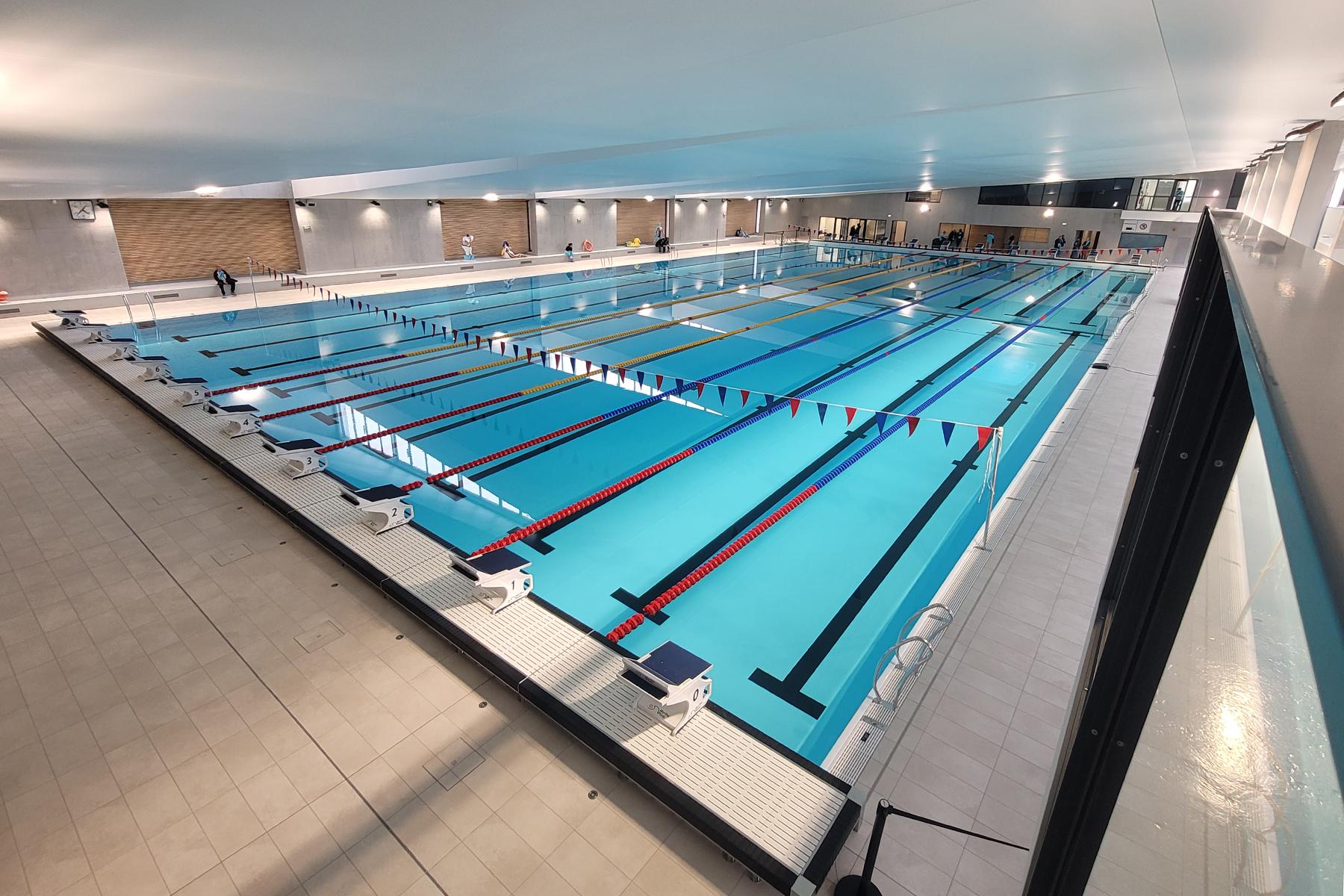
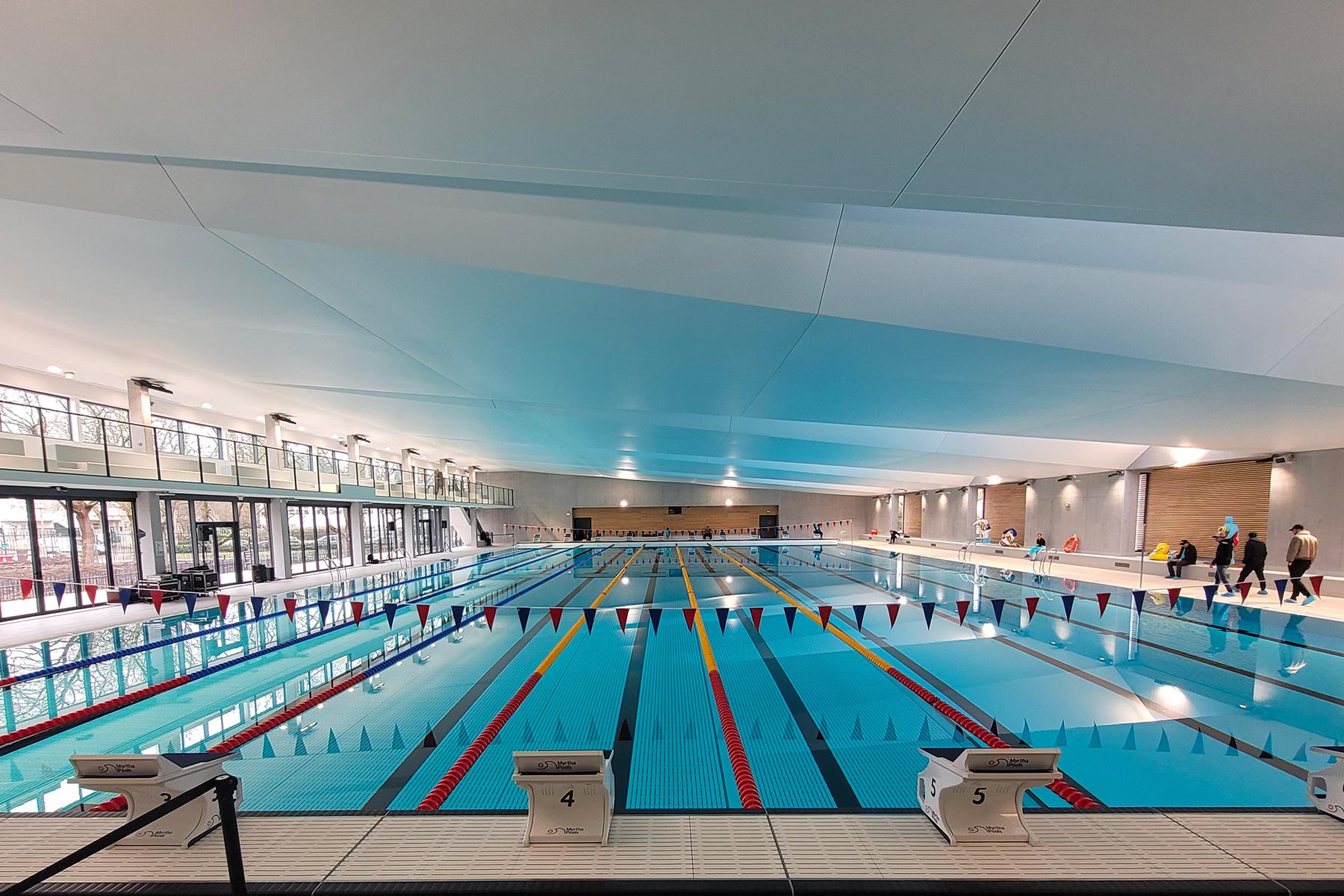
The former competition pool, which hosted world-class swimming and water polo finals in front of tens of thousands of fans, is now open to the public in Sevran. The reinstalled 50-m basin provides a full Olympic-specification infrastructure and accessories – including 20 Myrtha starting blocks. The Sevran community previously lacked it. The pool features a flip-up bulkhead and a movable floor. These features allow to divide the pool and reduce the depth. Two critical tools for carrying out multiple activities simultaneously: including learn-to-swim programmes, aquagym, and 25-m competition. An acoustic system by AcouDesign ensures the environment is pleasant for aquatic courses.
Work is currently underway in Bagnolet, where half of the former 50-m warm-up pool from the La Défense Arena is being permanently reinstalled. Originally designed to prepare elite athletes before competition, it will transition into a 25-m learn-to-swim pool serving the local community.
Perhaps the most unexpected expansion of the original legacy vision is the project currently underway in Lille. A 50-m pool is taking shape, incorporating elements from the La Défense Arena and, in part, from the temporary Aquatic Competition Centre installed outside the Olympic Aquatic Centre.
All in all, these three projects represent something genuinely rare in the history of major Games infrastructure: a dismantlement strategy that was never about taking things apart, but reusing them in public centres where they are needed most.