Text

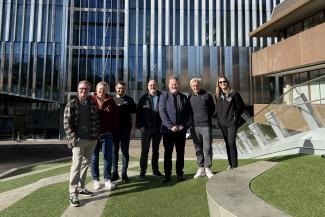
The carefully curated tour invited to discover some of New Zealand’s most impressive sports and leisure facilities. Highlights in Auckland and Christchurch included eight stunning facil­ities from community centres to stadiums and arenas. Together with IAKS ANZ board members Nick Yannakis and Matt Body – who kindly guided the tour with great ambition - the group explored best practice in the planning, design, and operation of facilities that serve both elite and community sport.

Author: Nick Yannakis, Director, Beca and IAKS ANZ Vice Chair

There are easier places to get to than New Zealand. We know this. We live here. Nobody drops into Aotearoa by accident on the way to somewhere else, unless their travel agent has made a serious mistake. So when a small but committed group of IAKS members decided, after the 2026 National Sports Convention in Melbourne, to keep heading south-east across the Tasman Sea for a study tour of New Zealand facilities, we knew two things. First, they were genuinely interested in sport and recreation infrastructure. Second, they were going to deserve a decent coffee on arrival.

The idea behind the tour was simple enough: take an international group through some of New Zealand’s newest, most interesting and, in Christchurch’s case, most hard-earned sport and recreation facilities. But as with most good study tours, the buildings were only part of the story. The real value came from the conversations in between: on buses, in stadium seats, over meals, in airport queues, and eventually, in hot pools while the weather began giving early notice that the South Island winter had not forgotten about us.


Preview image
Bild
Mainpower

©Warren and Mahoney

Content
Text

Hiwa Recreation Centre: a sports facility that creates belonging, supports wellbeing, enables community, and hosts competition

Image
Bild
Hiwa

© Scott Norsworthy | Warren and Mahoney

Text

The tour began on Friday evening in Auckland, with the group coming together after the energy and scale of the Melbourne convention. There was a social catch-up first, which is usually the best way to start any international study tour. Before anyone tries to interpret floor plans, design intent or op­erating models, it helps to know who you are standing next to. It also helps when half the group is still working out what time zone their body thinks it is in.
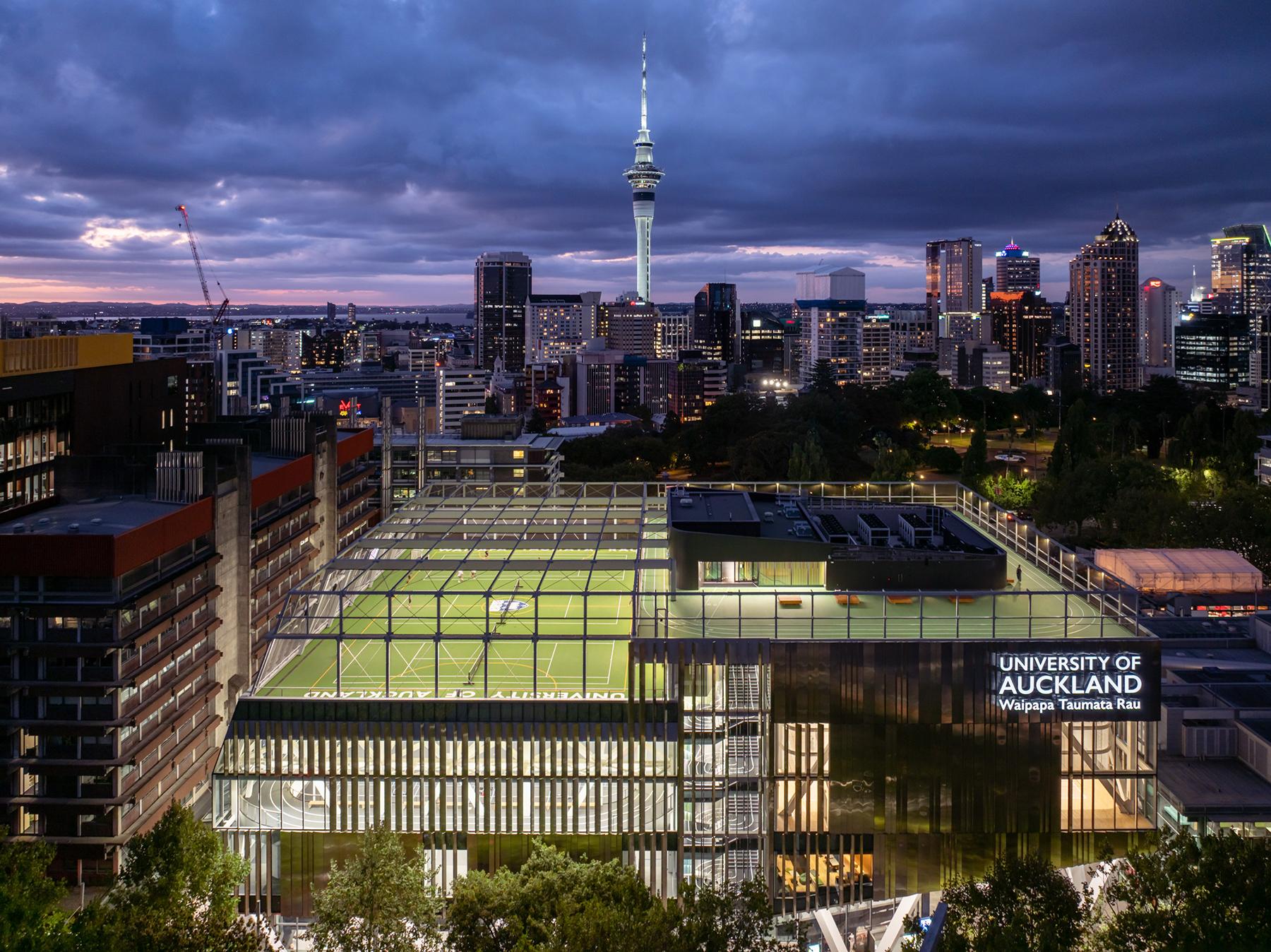
Saturday morning gave us the kind of Auckland weather that makes locals temporarily forgive the traffic. It was bright, clear and generous, and the group headed to Hiwa, the University of Auckland’s Recreation Centre. The tour was hosted by David Mahon, Warren and Mahoney’s lead architect, who guided the group through a facility that is impressive in photographs but far more compelling in person.

Hiwa is one of those buildings that rewards close inspection. The University of Auckland campus is dense, urban and constrained, so the facility has had to work hard for its place. Rather than sprawling out, it stacks activity vertically. Aquatic spaces, sports halls, fitness, movement, wellbeing and social spaces are layered through the building with a confidence that feels distinctly urban and highly intentional. It is not simply a gym with more polish. It is a campus-life building, a wellbeing building, a student experi­ence building and a high-performance sport building, all asked to coexist on a tight site without getting in each other’s way.

Text

For many on the tour, Hiwa alone justified the extra flight to New Zealand. It was the first proper facility visit and set the tone for the rest of the weekend: thoughtful design, complex briefs, cultural context, operational ambition, and the reminder that recreation buildings are increasingly being asked to do much more than accommodate sport. They need to create belonging, support wellbeing, enable community, host competition, and still function every day for users who may never think of themselves as athletes.

After Hiwa, the tour moved from architecture to logistics, which is often where the glamour of international networking goes to have a lie down. Bags were collected, shuttle buses were found, boarding passes were checked, and the group made its way to the airport for the short flight to Christchurch. “Short” in New Zealand means around an hour and a half, which is just long enough for visitors to look out the window, see mountains, ­coastline and braided rivers, and realise that the country may be small on a map but is not short on drama.


Text

Christchurch was waiting with a major occasion

Image
Bild
IAKS facility tour New Zealand inside One NZ stadium

(c) Nick Yannakis

Text

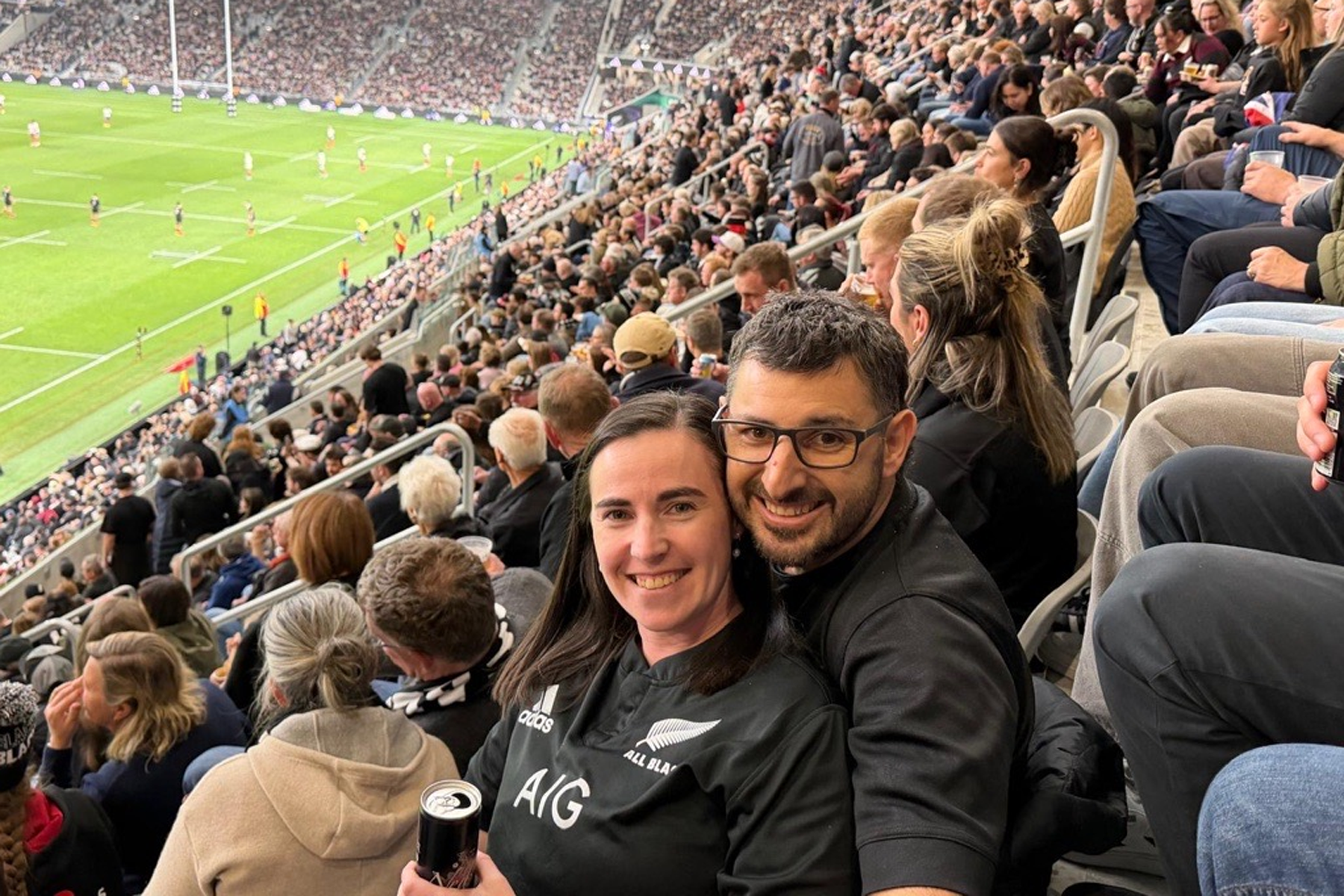
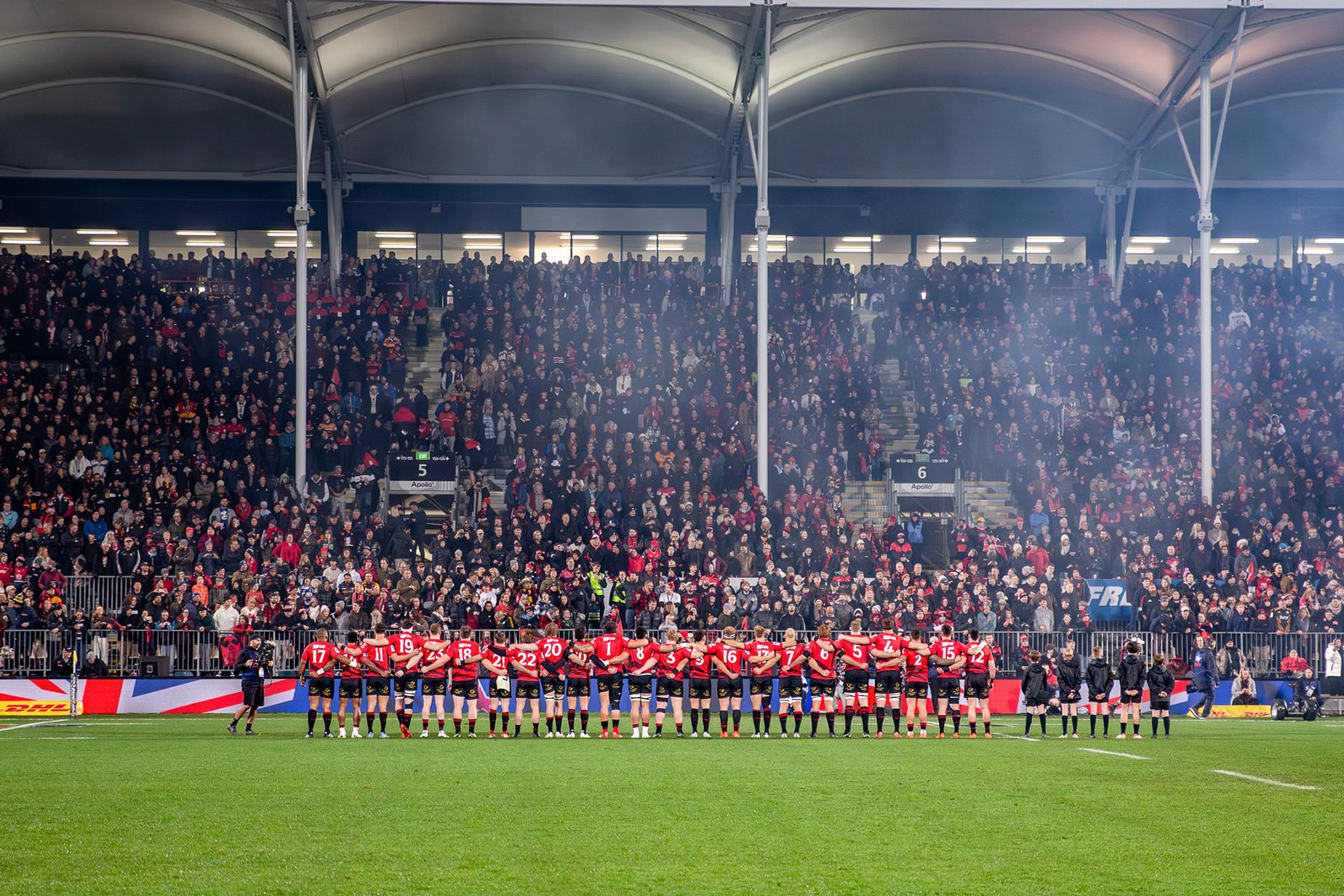
That evening the group joined local IAKS members at the first ever international rugby match at the city’s new covered One NZ Stadium, with the All Blacks playing France. It is difficult to overstate what that night meant for Christchurch. This is a city that lost much of its central city fabric, including its iconic sport­ing home, through the 2010 and 2011 earthquakes. For years, major rugby and events were held in temporary conditions, with a mix of pride, frustration and very pragmatic Canterbury patience. The new stadium is not just a venue. It is a marker of recovery, confidence and civic intent.

And yes, before anyone asks, the roof matters. In some parts of the world, a covered stadium is a useful comfort. In Christchurch, in July, it is an act of mercy. The first international rugby match under that roof felt like a civic housewarming, complete with a sold-out crowd, local pride, French flair, black jerseys everywhere, and enough noise to remind everyone that acoustics are not just a design discipline, they are also a crowd behaviour issue.

Text

For the visitors, it was hard to imagine a better introduction to Christchurch’s sporting culture. For the locals, it was a chance to show the city at a moment of real pride. For the IAKS group, it was also a living case study in how major venues sit within a post-disaster recovery narrative. Stadiums are sometimes criticized as being expensive symbols. In Christchurch, this one felt more specific than that. It represented the return of a particular kind of collective experience, one the city had been missing for a very long time.

New sports facilities are restoring Christchurch’s soul after the earthquakes
The next day, Christchurch put on a different kind of lesson. Nick Yannakis and Matt Body hosted the group through the sporting facilities the city had rebuilt, adapted or carried through since the earthquakes. This was not just a tour of buildings. It was a tour of decisions made under pressure, temporary solutions that lasted longer than expected, community needs that changed over time, and the slow work of rebuilding a city’s sport and recreation network.

Image
Bild
MainPower Stadium 1800

© Warren and Mahoney

Text

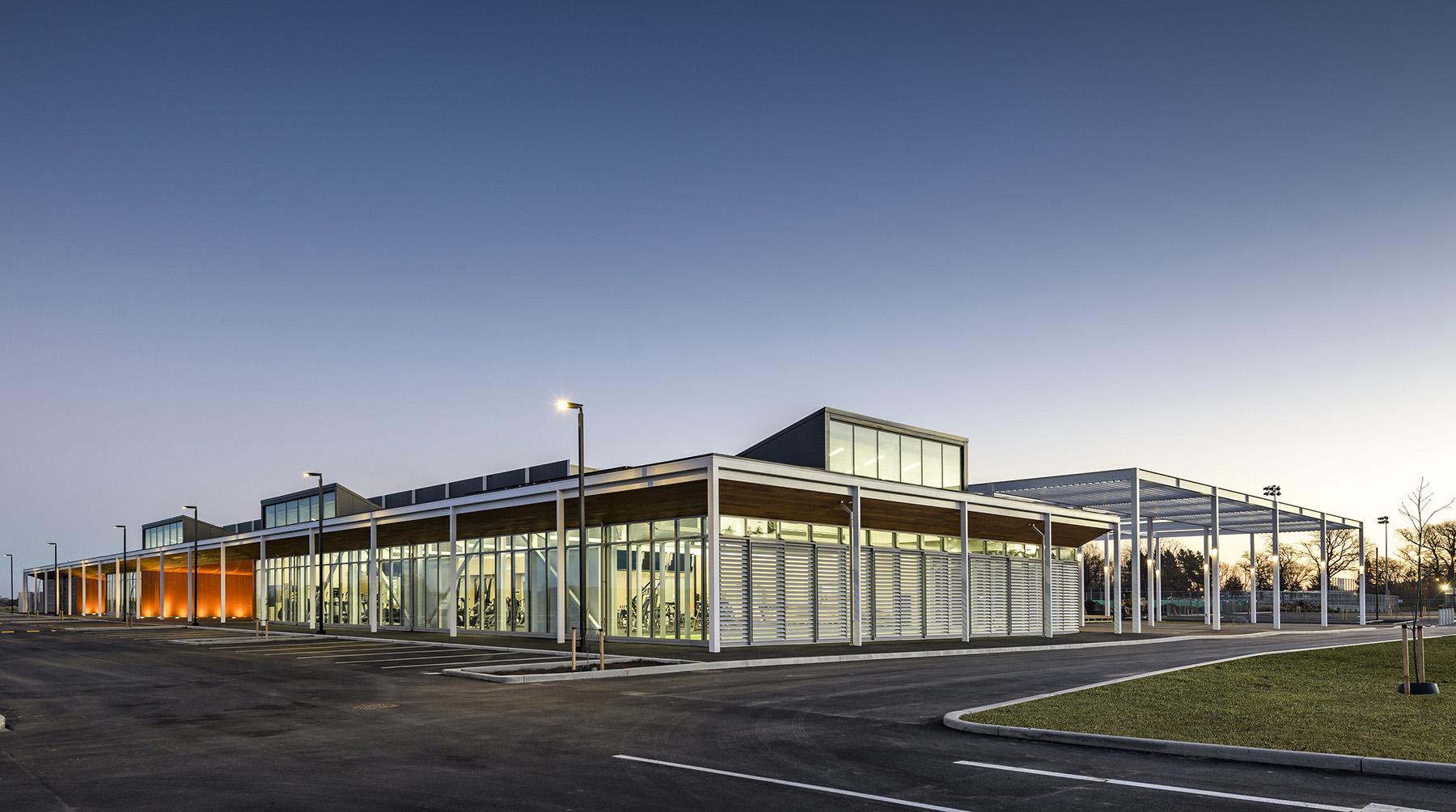
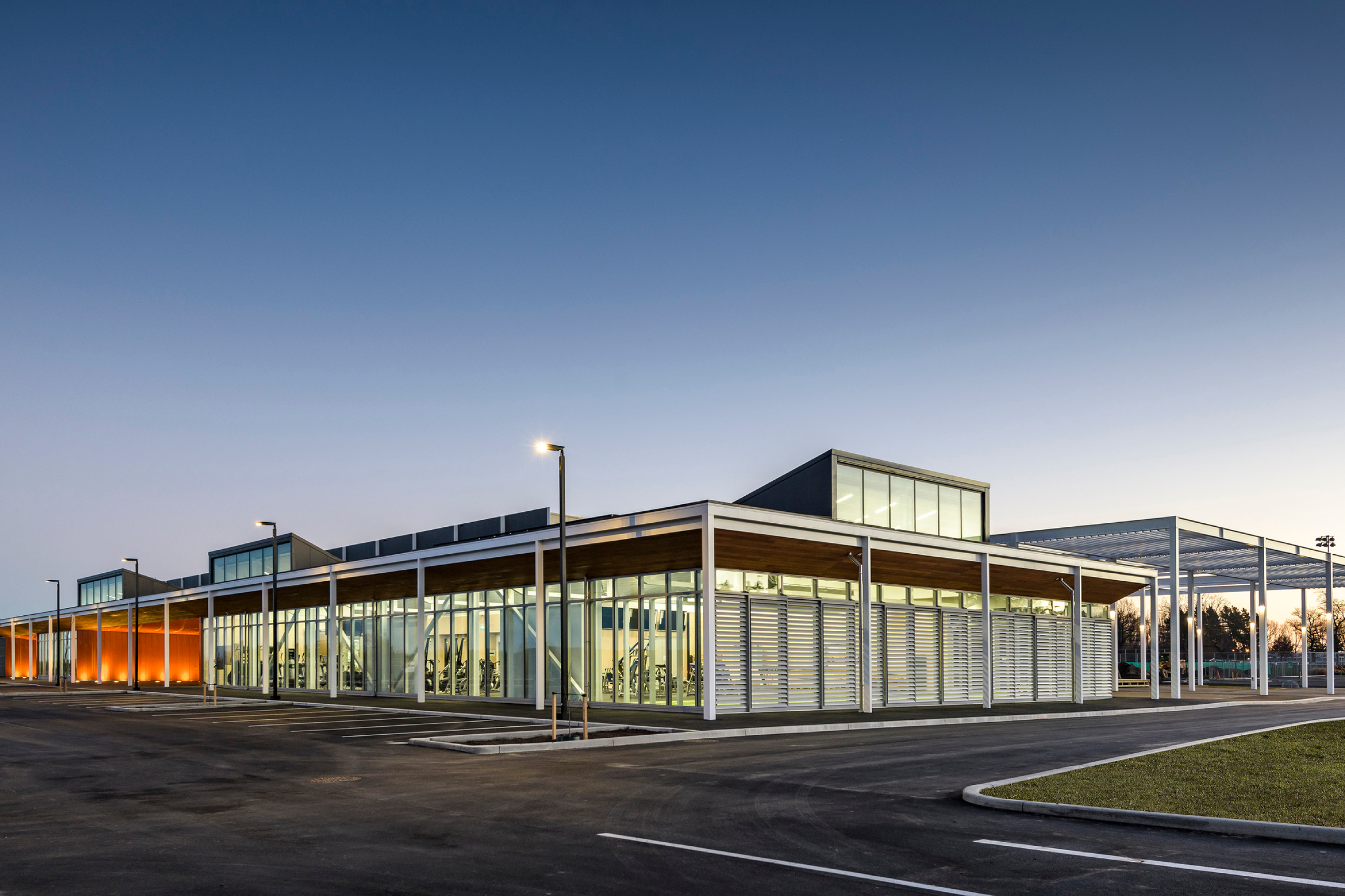
MainPower Stadium showed the importance of community-scale provision in a rapidly growing district. It is the sort of facil­ity that may not always attract the same headlines as a national stadium, but which often has the deepest daily connection with its community. Multi-use, flexible and grounded in local growth, it represented the kind of regional facility planning that matters profoundly to community sport. These buildings need to work hard all week, not just on event days.

Image
Bild
Parakiore

© Warren and Mahoney

Text

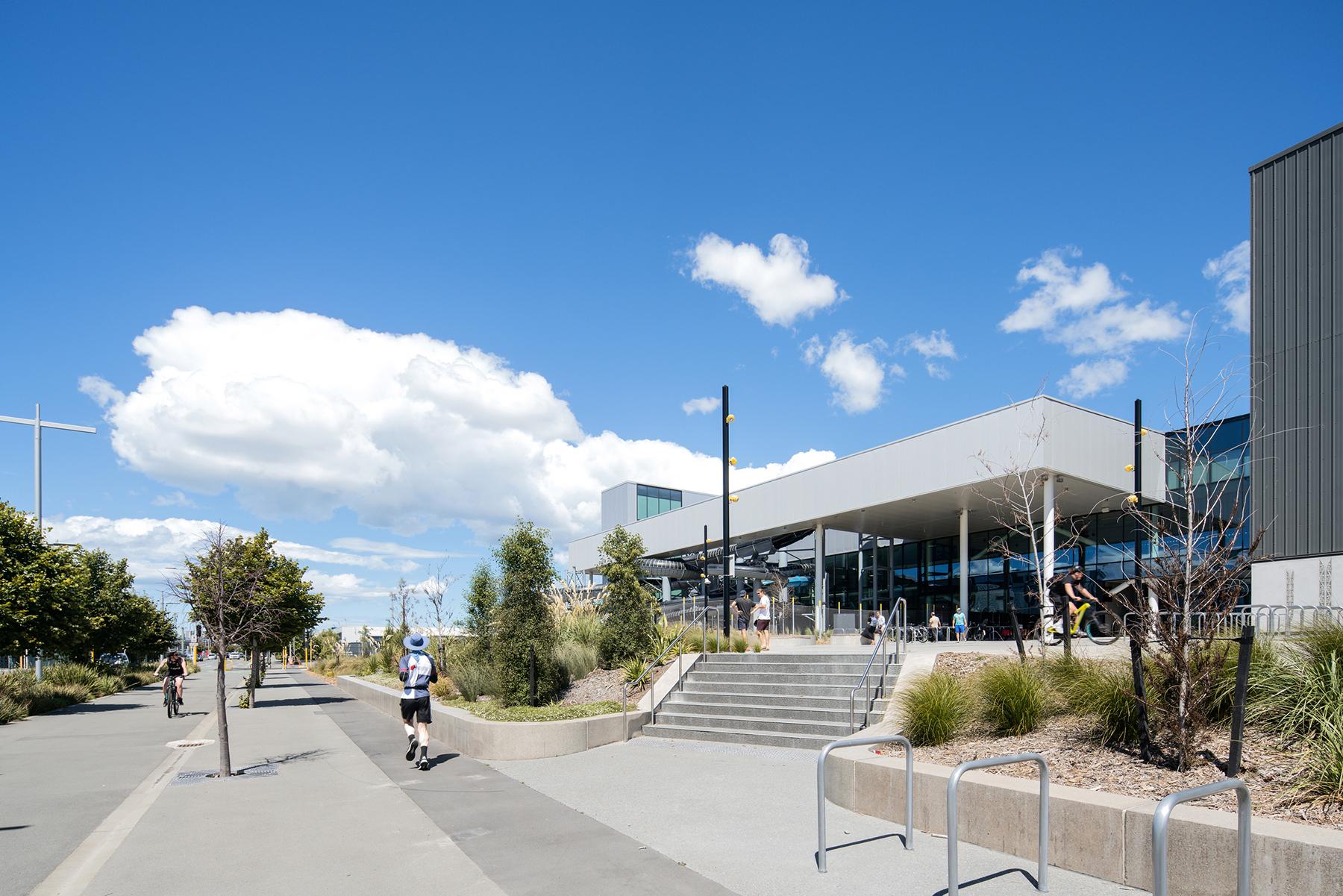
Parakiore Recreation and Sport Centre was one of the most significant facilities on the tour and certainly one of the largest. At around 30,000 m², this high-performance, aquatic, recreation and public facility is a major statement for Christchurch. It brings together elite sport, public recreation, aquatic provision, indoor courts, wellness spaces and community access in a way that reflects the modern expectation that major recreation buildings should serve many layers of use. For aquatic people, it was also the part of the tour where everyone stood a little closer, asked slightly more detailed questions, and quietly started counting plantroom implications in their head.

Parakiore is significant not only because of its scale, but because of what it replaces and restores. Christchurch lost major aquatic and recreation infra­structure in the earthquakes, and the city has been working for years to rebuild that capacity. A facility of this nature has to respond to elite sport requirements, everyday public use, learn-to-swim demand, accessibility, leisure water, wellness, events and operational sustainability. That is a complex brief in any market. In a post-earthquake city, it carries an even stronger civic weight.

Image
Bild
He Puna Taimoana 1800

© Jason Mann Photography

Text

Important research
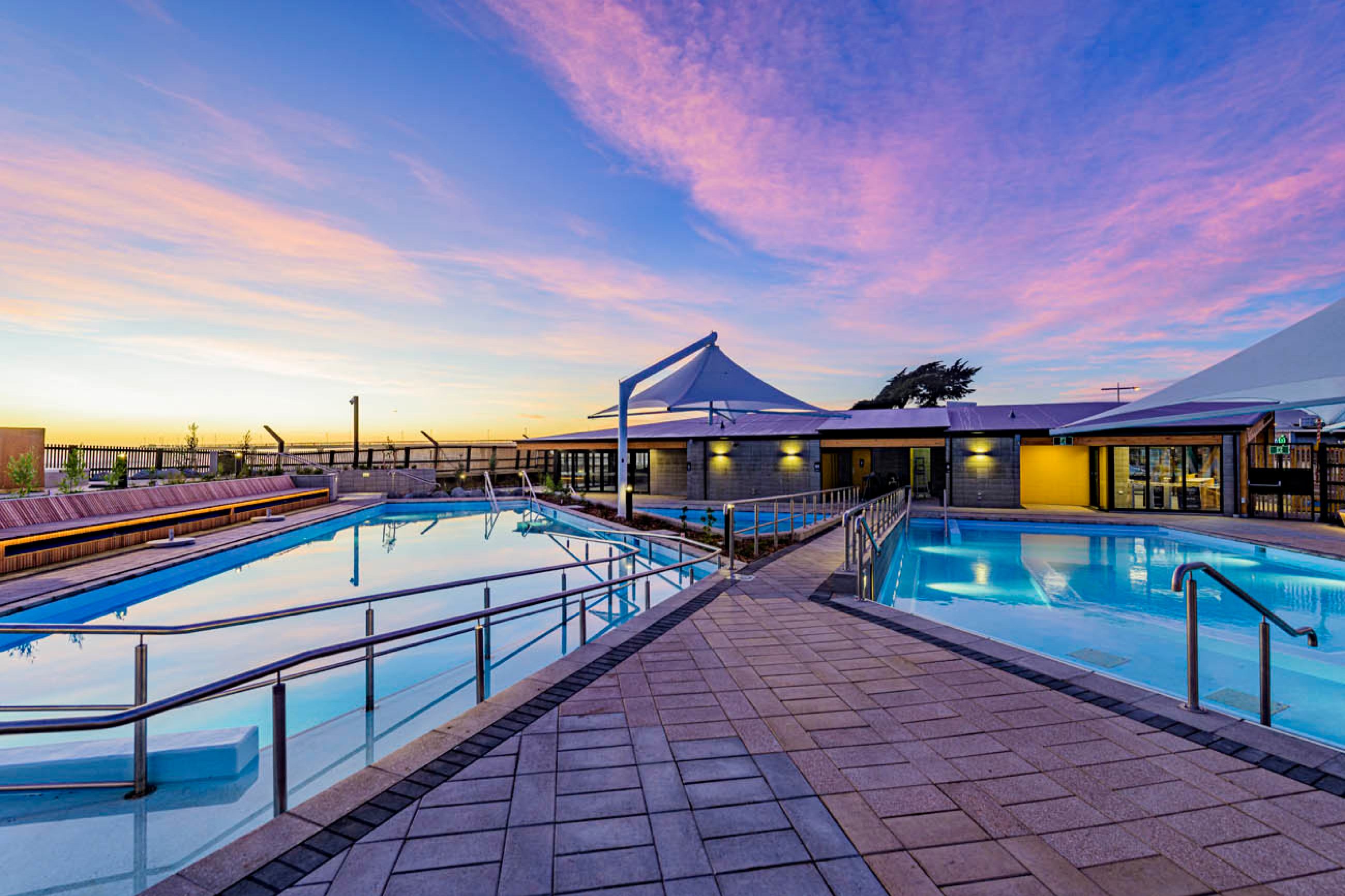
By the afternoon, the weather began to turn, which in Canterbury is less a forecast than a warning to find either a jacket or a body of warm water. Fortunately, the programme included He Puna Taimoana Hot Pools at New Brighton. In study tour terms, this was clearly research. Important research. Deeply strategic, highly immersive, thermally enhanced research.

The hot pools proved a memorable part of the tour. They also provided one of the best reminders that local knowledge matters. A lone Englishman, feeling brave and perhaps inspired by the relaxed confidence of nearby Kiwis, attempted to do as the locals do and walked out in flip flops. He very quickly discovered that what looks casual in a New Zealand winter is often just a population with highly developed cold-weather denial. There is a fine line between cultural immersion and losing feeling in your toes.

Image
Bild
Wolfbrook Arena © Venues Ōtautahi | Angelo Damian

© Venues Ōtautahi | Angelo Damian

Text

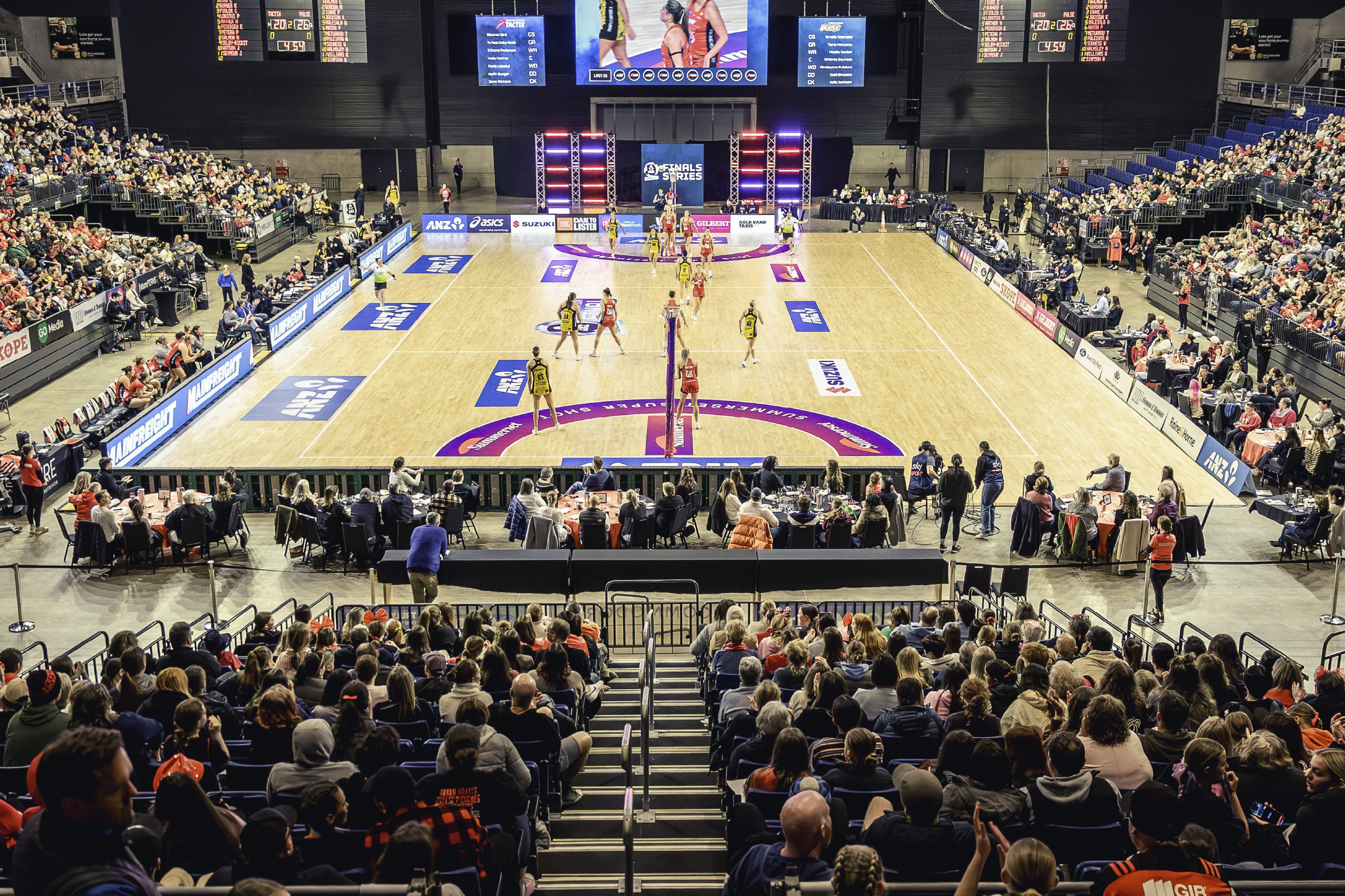
On the final day, the weather really settled in. It was cold, wet and determined, which made it a near-perfect day to think about covered, enclosed and resilient sporting infrastructure. The group began at Wolfbrook Arena, safely indoors, ­where the focus shifted to the role of indoor arenas in a city’s event and sport network. Facilities like this need to accommodate sport, entertainment, major events, community uses and the operational realities of bump-in, broadcast, crowds and commercial expectations. In Christchurch, venues like Wolfbrook have played an important role in maintaining continuity while the city’s larger anchor projects took shape.

Image
Bild
Temporary Stadium

© Venues Ōtautahi | Angelo Damian

Text

From there, the group only had to move next door to the temporary stadium. “Only” is ­doing a fair bit of work in that sentence. By this stage the ­weather was properly making itself known, and it took a little commitment to brave the condi­tions. But in many ways, that made the visit more valu­able. Temporary infrastructure has a way of becom­ing part of a city’s identity, particularly when it successfully carries a community through a difficult period. What was originally a rapid re­sponse became, over time, a reminder that “temporary” in sport infrastructure can sometimes mean “essential for longer than anyone planned”. There is a lot to learn from that, especially for cities facing disruption, whether from natural disaster, climate events, funding constraints or changing participation patterns.

Image
Bild
One NZ Warren and Mahoney

© Warren and Mahoney

Text

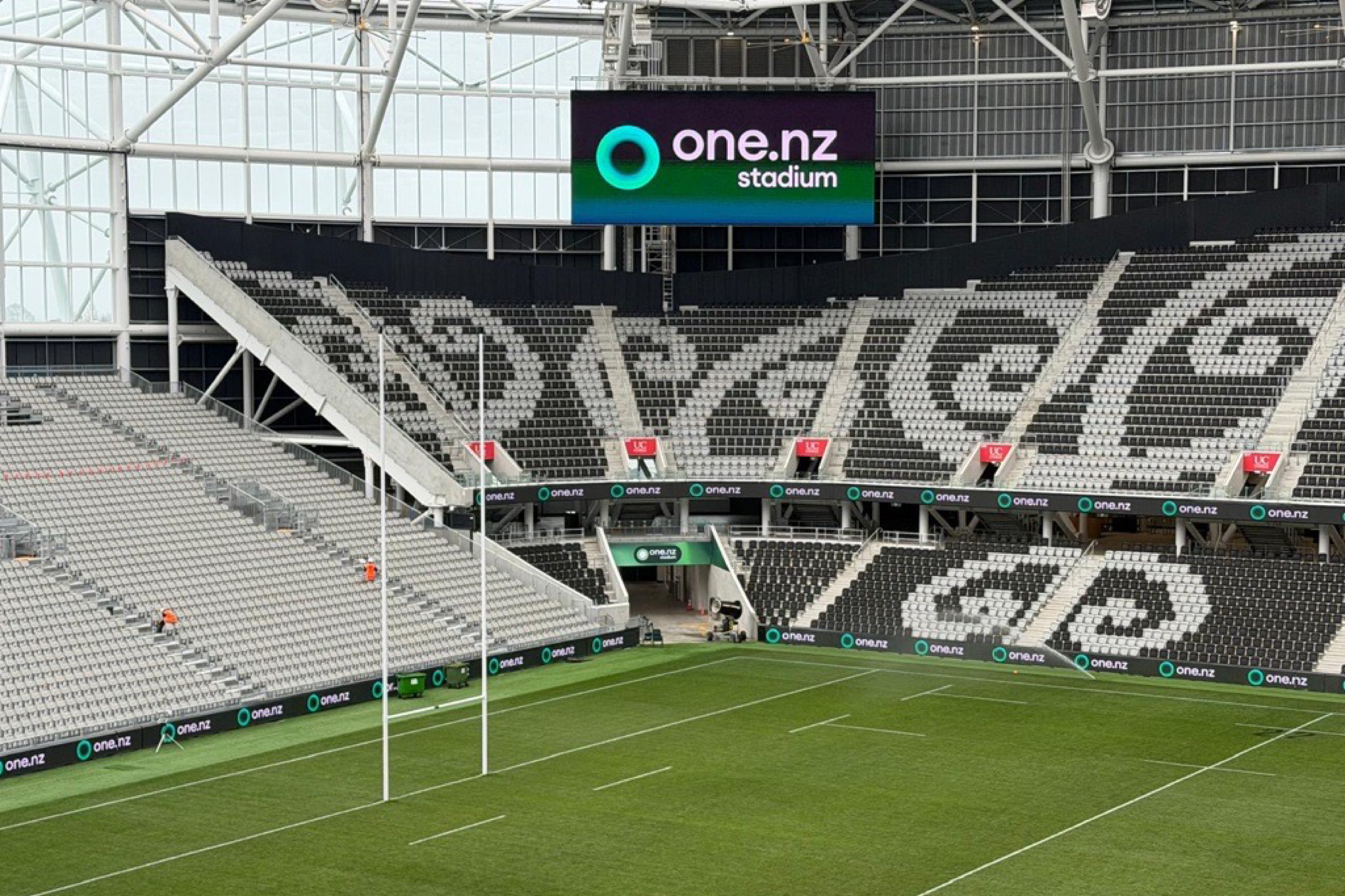
After that, and after everyone had earned a warm tea, the visit to the new covered One NZ Stadium landed with even greater impact. Nothing makes the case for a roof quite like standing in cold rain at one venue and then walking into a protected, civic-scale stadium where the weather suddenly becomes some­thing happening outside the experience rather than to the ­experience. It was a beautifully practical reminder that in some parts of the world, investment in covered stadiums is not extravagance. It is functionality, reliability and year-round civic value.

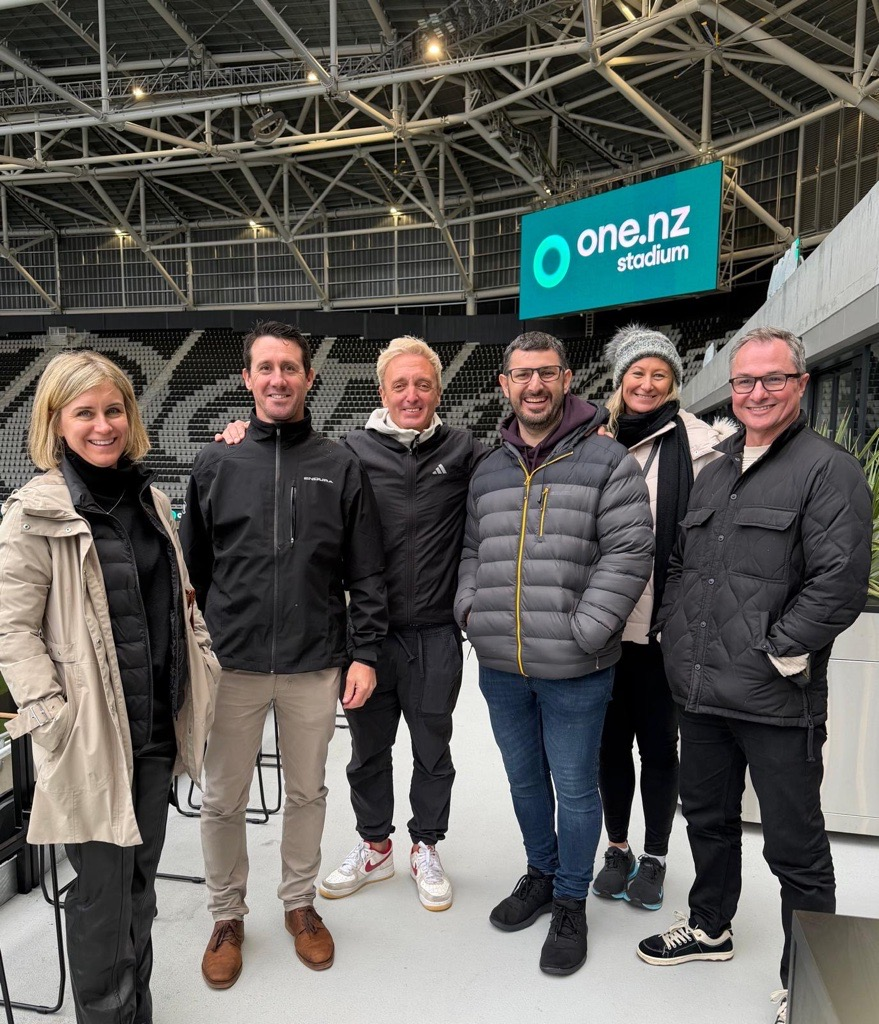
The behind-the-scenes tour of One NZ Stadium also allowed the group to move beyond the match-night spectacle and into the working parts of the building. Seeing a major venue from the spectator seating bowl is one thing. Seeing it from the service corridors, back-of-house areas and operational spaces tells a different story. International study tours are valuable ­precisely because they let professionals move beyond the brochure and into the parts of a building that make it succeed or fail in op­eration. The group could consider not only how the stadium looks, but how it works, how it supports events, how it manages ­people, and how design decisions become operational realities once the opening speeches are over.

Text

Key take-away: the impact of shared learning
 

Image
Bild
One NZ Stadium - tour participants

(c) Nick Yannakis

Text

Some of the touring party stayed on after the formal programme, taking the opportunity to experience the South Island properly in winter. Heavy snow followed, the ski fields looked magnificent, and New Zealand offered the kind of alpine scenery that makes visitors forgive the long-haul flights, the occasional sideways rain and, possibly, the regrettable footwear choices. For those who came all this way, the reward was not only facil­ities, but landscape, hospitality and a sense of place.

Reflecting on the tour, the strongest message was not simply that New Zealand has some excellent new sport and recreation buildings. It does. But the deeper value was in the shared learning. Each facility told a different story: campus wellbeing in Auckland, community growth in North Canterbury, post-earthquake recovery in Christchurch, temporary resilience, arena continuity, major aquatic investment, stadium regeneration, and the softer but equally important role of places that help people recover, gather and connect.
 

Text

That is what IAKS does well. It brings people into the same ­physical spaces and asks them to look, question, compare and share. In an industry where every country has its own fund­ing models, planning cultures, climatic challenges and sporting traditions, there is huge value in seeing how others respond. 

New Zealand may be a long way down under, but the questions being explored here are familiar everywhere. How do we make facilities more inclusive? How do we design for daily commu­nity value as well as major events? How do we build resilience? How do we honour culture and place? How do we make sport and recreation infrastructure work harder without making it feel ­harder to use?

The 2026 IAKS New Zealand Facility Tour was small in numbers, but rich in conversation. It showed that the best study tours are not measured by how many venues are ticked off, but by the quality of the discussions they create. It reminded us that international learning does not always happen in conference rooms. Sometimes it happens behind a stadium stand, beside a pool, in a van between site visits, over a cup of tea, or while an Englishman rethinks his footwear choices in the rain.

For those of us hosting, it was a privilege to share a little of Aotearoa New Zealand’s sport and recreation story. For those visiting, I hope it was worth the miles. And for everyone involv­ed, it was a reminder that when we take the time to travel, look closely and learn from one another, we return home with more than photographs. We return with better questions, better ideas, and a few stories that will improve with every retelling.

Text

Author: Nick Yannakis, Director, Beca and IAKS ANZ Vice Chair