Text
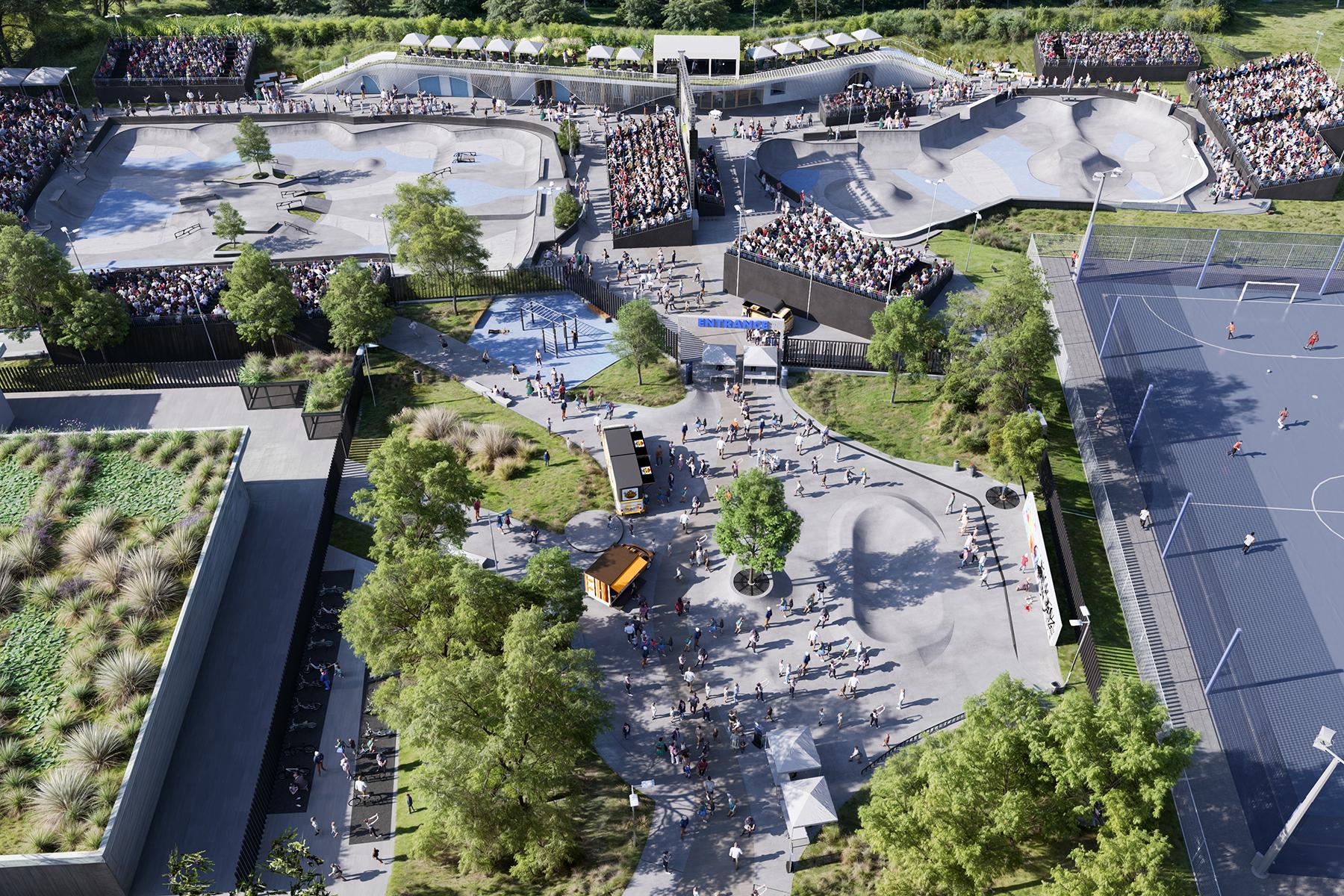
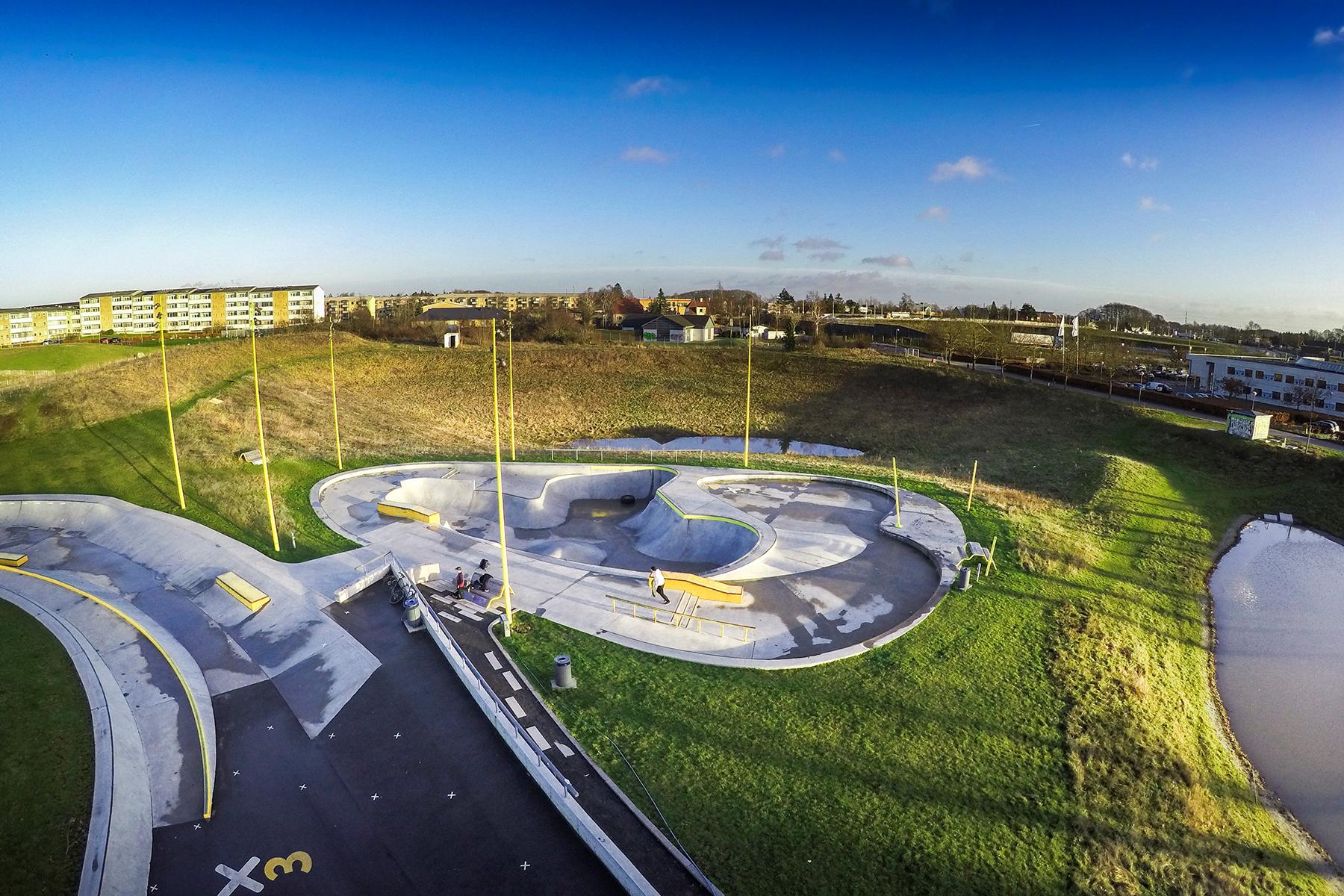
Skateparks come in a wide variety of forms – from smaller neighbourhood facilities to large-scale regional parks, from street plazas to complex bowl terrains and hybrid layouts. In terms of their intended uses, too, the spectrum ranges from informal leisure activities to facilities capable of hosting international competitions. What the various skatepark projects have in common, however, is their basic structural design. They are predominantly highly sealed open spaces with sculpted concrete surfaces, often situated in exposed locations within the urban environment.
It is precisely these properties that make skateparks particularly vulnerable to climate change. Rising average temperatures, longer heatwaves and more intense heavy rainfall events have a direct impact on materials, surface properties, drainage systems, usability and the quality of the experience. The heat island effect, glare from light-coloured concrete surfaces, thermal stresses in materials and insufficient drainage areas affect not only structural requirements but also usage times, safety considerations and social interaction.